

Guided practice that leads to progress
The Thinking Work of Social Studies
Skill Builders gives students meaningful opportunities to practice the core thinking skills of social studies through structured, inquiry-driven support. As students read, write, analyze visuals, interpret maps, and evaluate evidence, they strengthen disciplinary literacy and build deeper understanding across historical and geographic topics.
Designed for flexible classroom use, Skill Builders supports remediation, enrichment, and independent or small group work. And it empowers teachers to provide personalized skill practice that builds confidence, independence, and engagement.

Why Skill Builders?
Anatomy of a Conversation


Step into a
Skill Builders Classroom
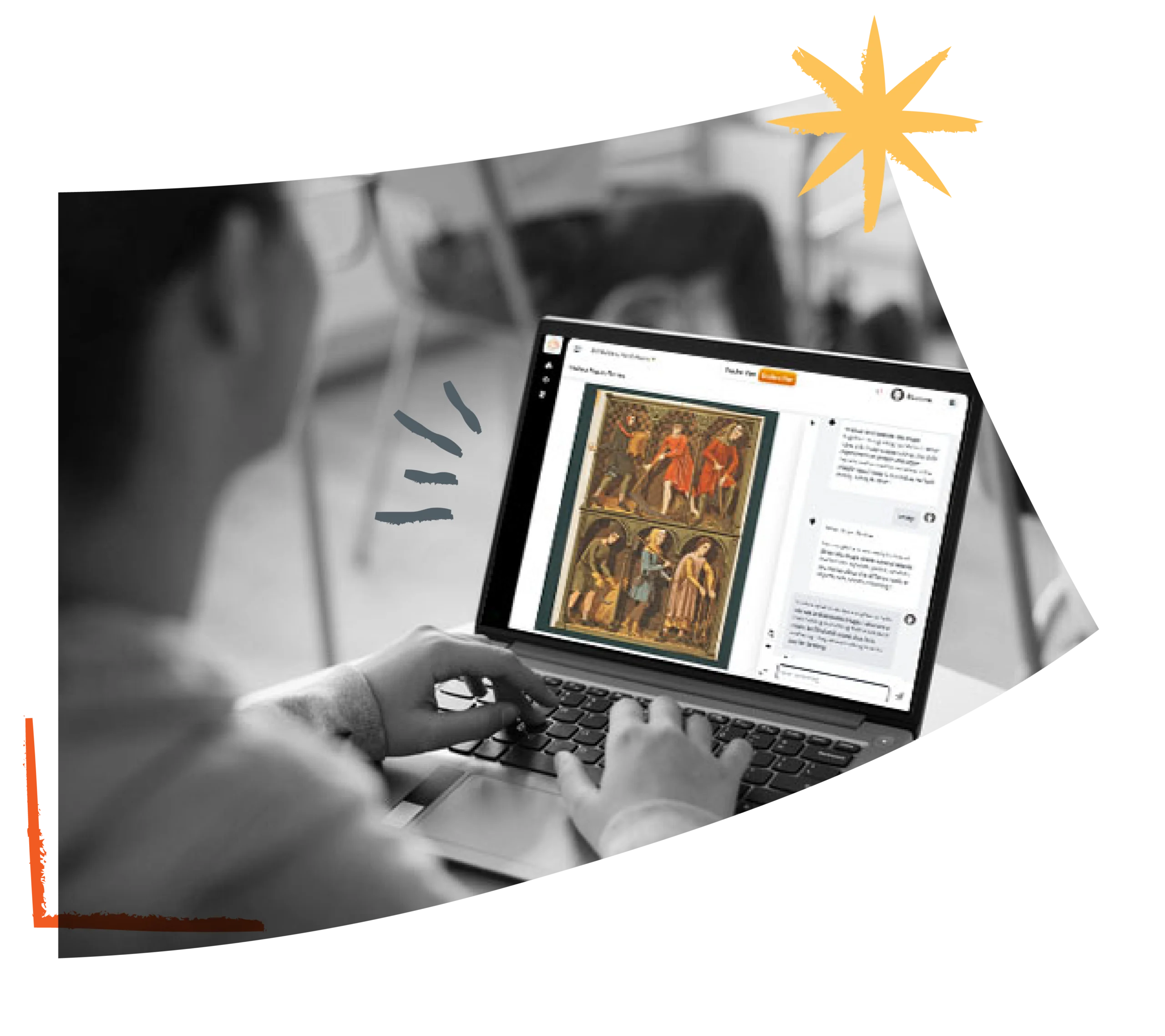
You’ll see students actively engaging in personalized, scaffolded practice as they read primary sources, analyze images, interpret maps, or build evidence-based responses. Through guided prompts and immediate feedback, students explain their thinking, revise ideas, and engage more deeply with historical and geographic inquiry.
Around the room, you’ll see different levels of support and challenge happening at the same time. Some students are strengthening foundational skills, while others are extending their thinking through deeper analysis and application. The result is a classroom where every learner is actively engaged in meaningful social studies practice.
See How Skills Are Built
Explore the instructional framework, disciplinary literacy skills, and assessment behind each Skill Builders assistant.
Disciplinary Literacy Skills
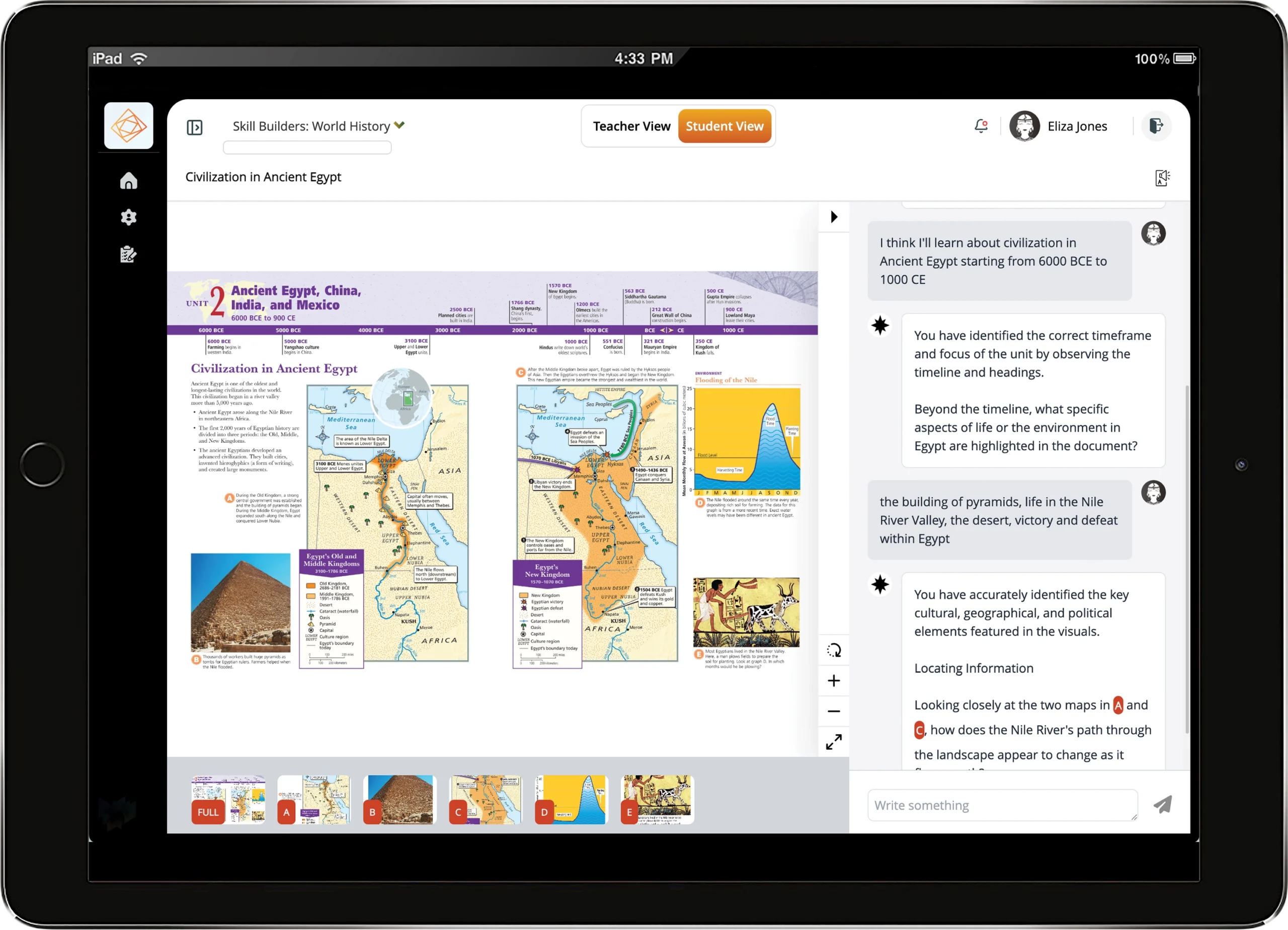
Using rich maps, visuals, and graphics, students develop geographic reasoning, spatial thinking, pattern recognition, evidence analysis, interpretation, and application skills.
Instructional Framework
Atlas Assistant uses a Geographic Literacy framework with four DOK levels: locating, interpreting, analyzing, and applying information.
Skills Assessment
Geographic literacy skills are assessed using a built-in rubric that gives students instant feedback and keeps teachers informed about student progress.
Disciplinary Literacy Skills
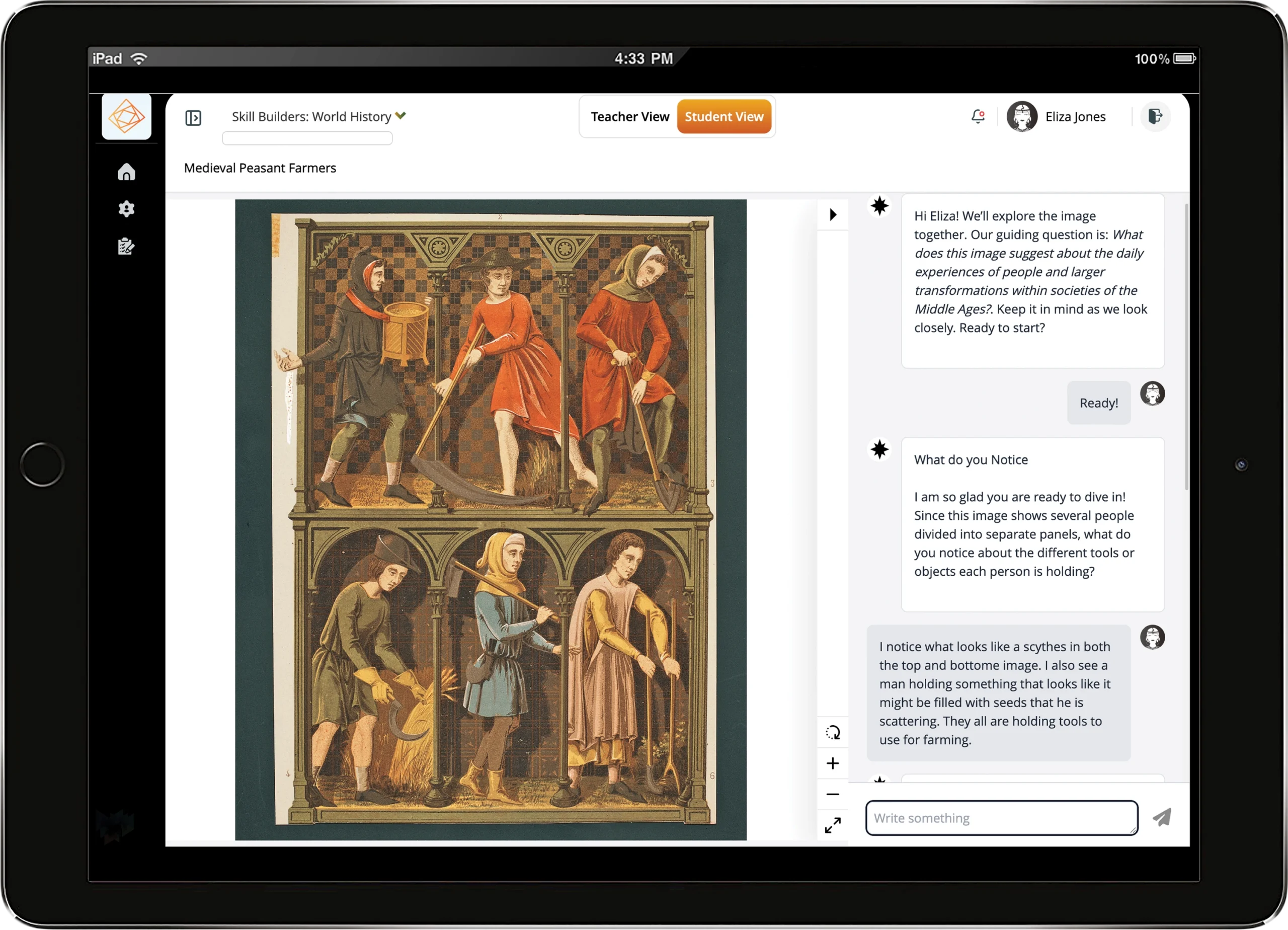
Analyzing a variety of images, students develop observation, visual analysis, questioning, inference, interpretation, evidence use, and conclusion-drawing skills.
Instructional Framework
Image Assistant uses the OPTIC(S) framework: Observation, Parts, Title, Interrelationships, Conclusion, and Source.
Skills Assessment
Image analysis skills are assessed using a built-in rubric that gives students instant feedback and keeps teachers informed about student progress.
Disciplinary Literacy Skills
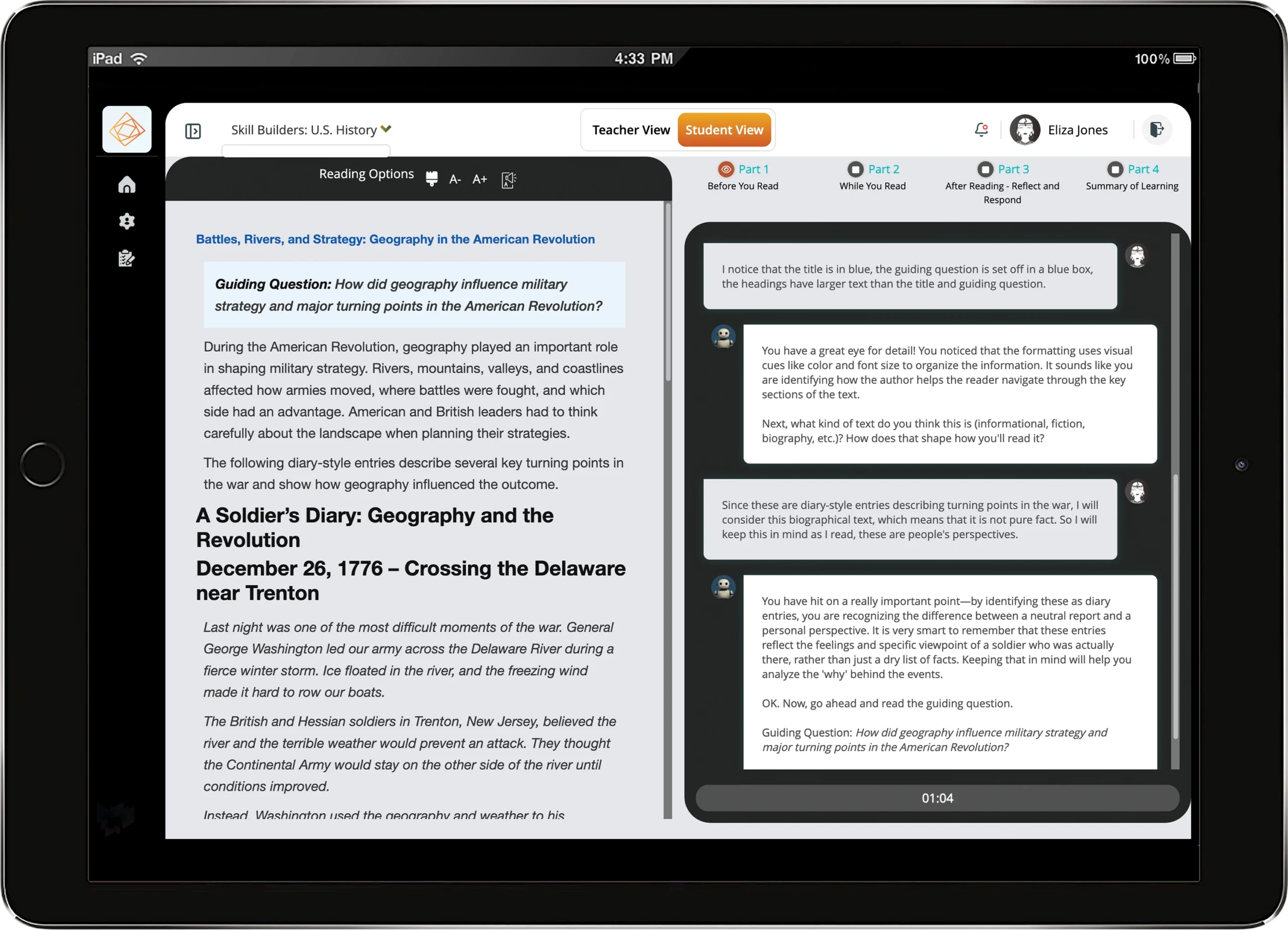
Reading both traditional and alternative texts, students develop comprehension, evidence gathering, metacognition, questioning, summarization, and reflection skills.
Instructional Framework
Reading Assistant uses a Before-During-After framework: Activate prior knowledge, analyze evidence, and reflect on meaning.
Skills Assessment
Reading skills are assessed using a built-in rubric that gives students instant feedback and keeps teachers informed about student progress.
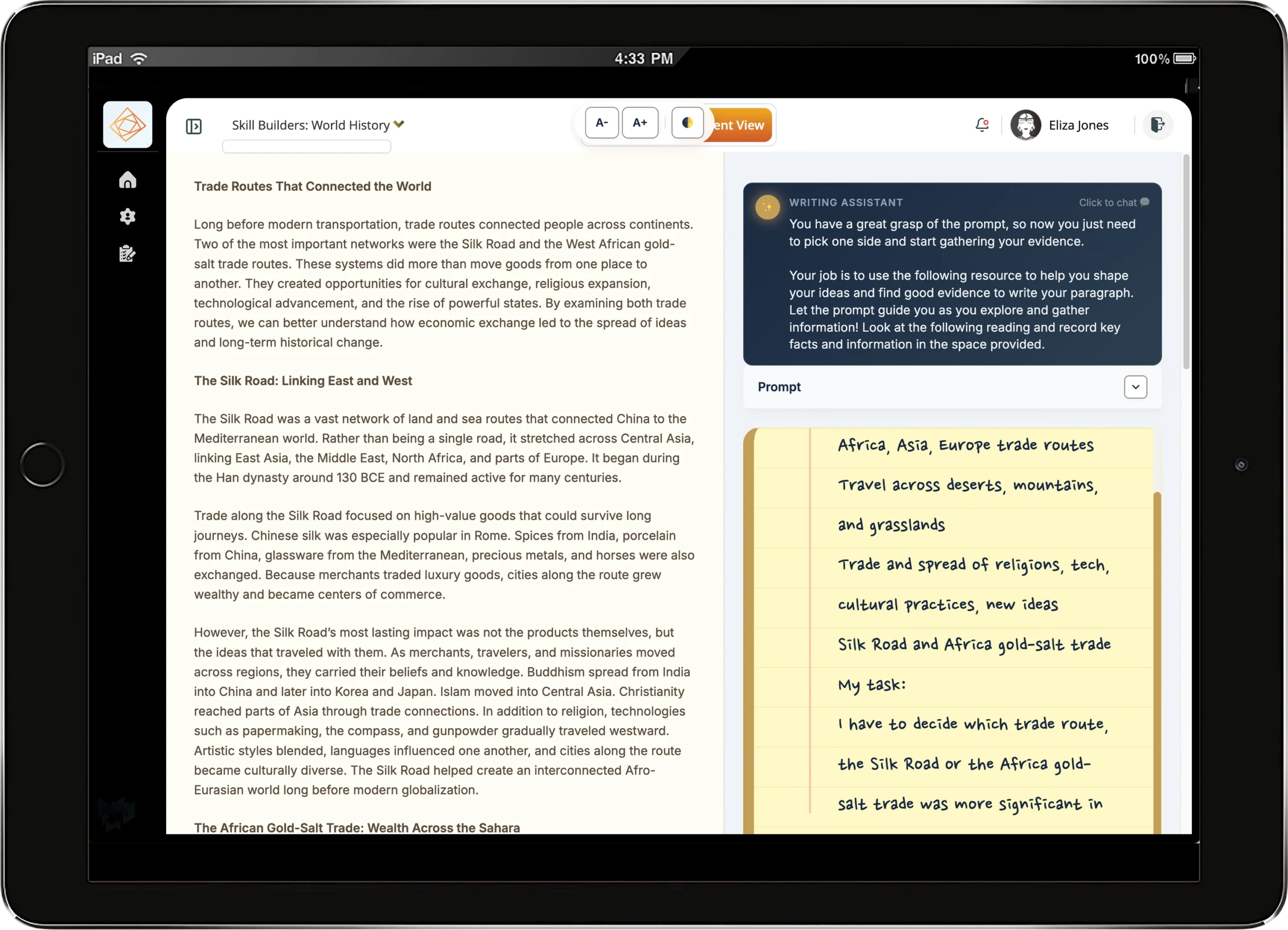
Disciplinary Literacy Skills
Writing in response to prompts focused on history, students develop argumentation, evidence-based writing, reasoning, academic language, organization, and revision skills.
Instructional Framework
Writing Assistant uses the ACES process (Assertion, Cite Evidence, Explain Reasoning, Summarize Thinking) and a related framework, CER (Claim, Evidence, Reasoning).
Skills Assessment
Writing skills are assessed using a built-in rubric that gives students instant feedback and keeps teachers informed about student progress.
Explore your content area
Explore the U.S. and world history eras and themes that power Skill Builders, the discipline in “disciplinary literacy skills.”

Ready to learn more
about Skill Builders?
Start your free trial or reach out to your dedicated curriculum specialist.
Start a conversation