

Reading the world around us
Atlas Assistant
Atlas Assistant transforms maps, charts, graphs, images, timelines, and texts into opportunities for discovery. Through interactive conversations, students explore history and geography, build the background knowledge needed to understand new ideas, and develop the skills to think critically about the world around them. The experience adapts to each learner, guiding students from observation to interpretation, analysis, and application. As students grow in confidence and understanding, teachers gain a clear window into their thinking, creating new opportunities to support learning and celebrate progress.


Why Atlas Assistant?
Anatomy of a Conversation


Step into an
Atlas Assistant Classroom
You’ll see students actively exploring maps, charts, graphs, visuals, and text as they investigate geographic and historical questions. Through guided conversations, students locate information, interpret sources, analyze evidence, and apply their thinking to build understanding.
Some students receive scaffolded support to strengthen skills and access content, while others extend learning by identifying patterns, making connections, and explaining ideas in new ways. Across the classroom, students engage in meaningful inquiry, build background knowledge, and grow as confident, capable thinkers.
See How Skills Are Built
Explore the table of contents, DOK progression, and skills and concepts behind each Atlas Assistant edition.
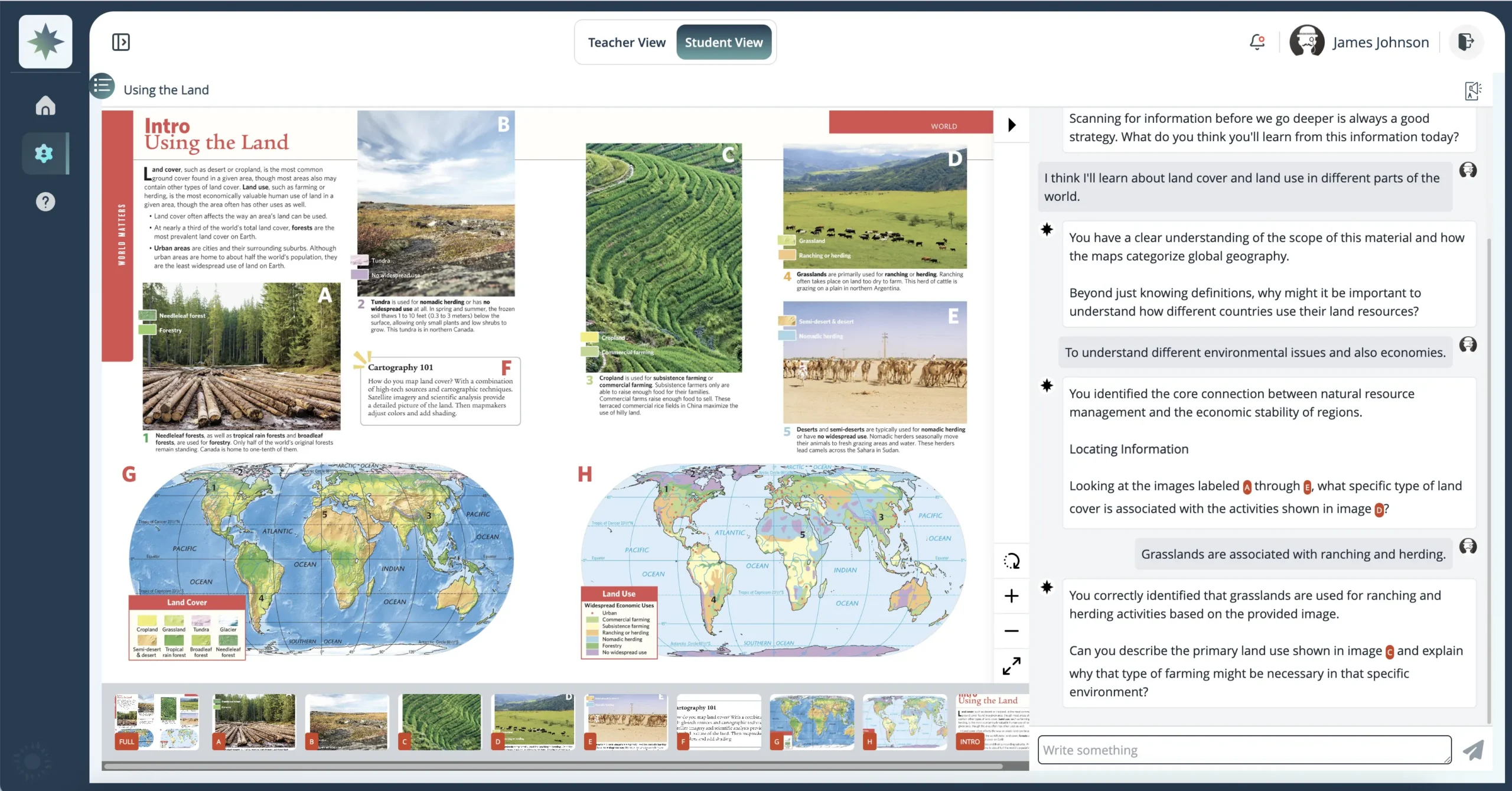
Table of Contents
Survey of world geography through 10 thematic units, exploring physical and human geography, regions, resources, population patterns, and global interconnections.
DOK Progression
Students locate geographic patterns, interpret relationships among people and places, analyze global systems and connections, and apply their understanding to real-world challenges.
Skills & Concepts
Builds geographic literacy through atlas and map skills, spatial reasoning, regional analysis, and exploration of physical systems, human geography, resources, population, and global interconnections.
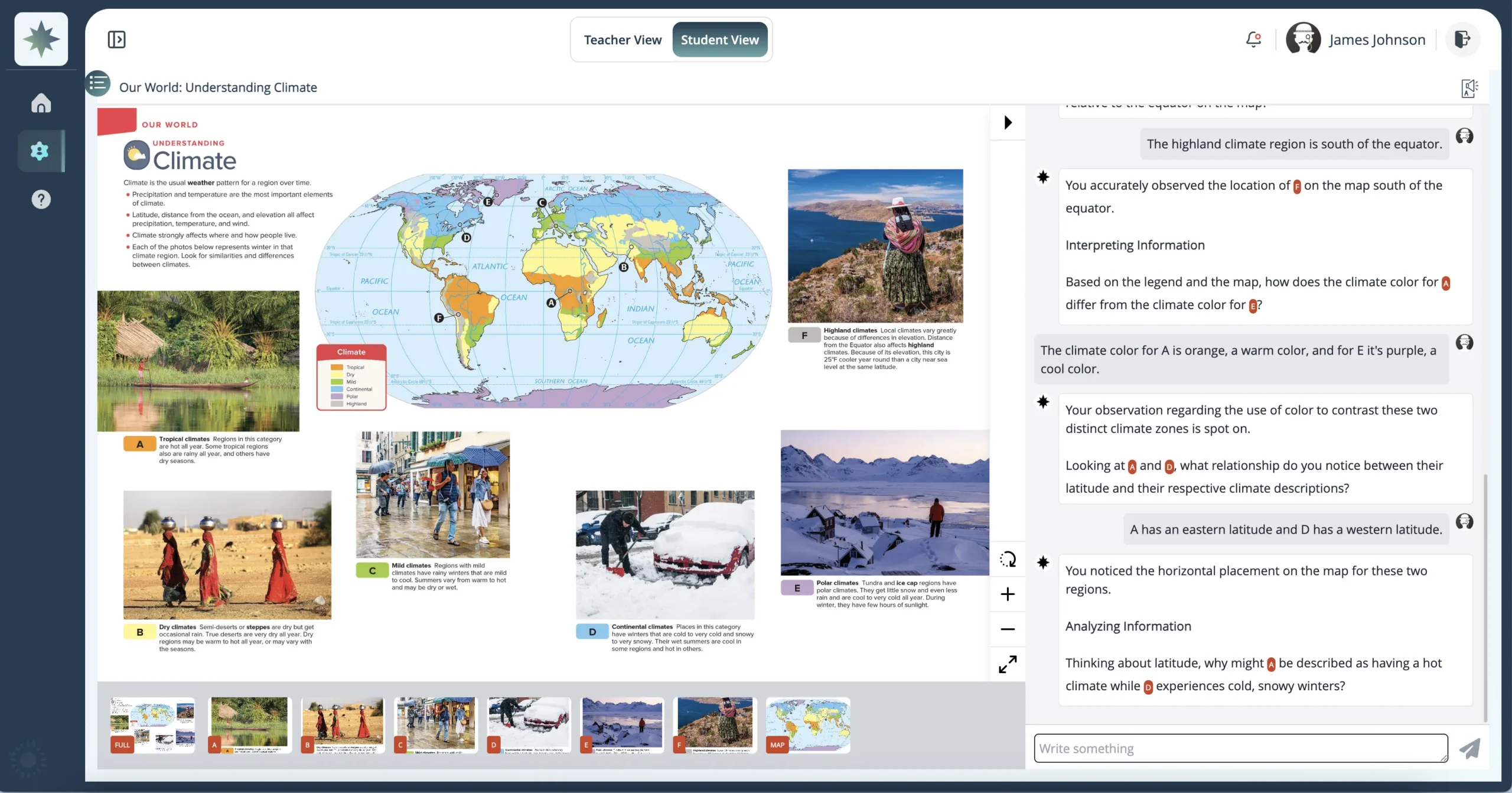
Table of Contents
Comprehensive survey of world geography organized around continents, countries, and regions, developing geographic literacy through physical, political, population, climate, and land-use studies.
DOK Progression
Students locate information about regions and countries, interpret geographic characteristics, analyze patterns across places, and apply their learning to understand global interdependence.
Skills & Concepts
Develops geographic literacy through map skills, regional comparisons, and investigation of physical and human geography, climate, population, resources, movement, and place-based inquiry.
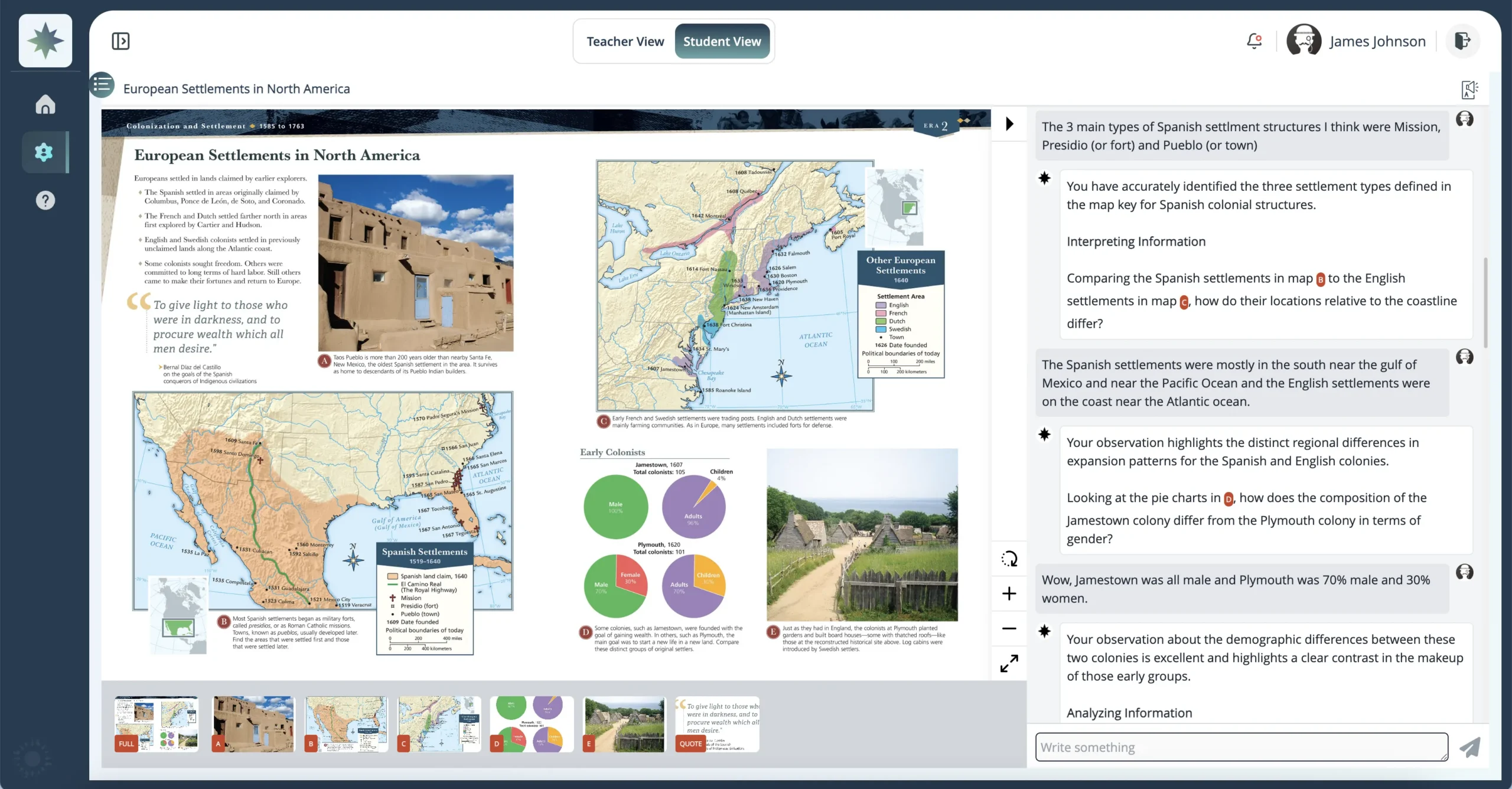
Table of Contents
Chronological survey of United States history from pre-Columbian migrations and Indigenous cultures to globalization and contemporary America, organized into 11 historical eras.
DOK Progression
Students locate evidence in maps and sources, interpret historical events, analyze change over time, and apply their understanding to explain the American experience.
Skills & Concepts
Strengthens historical thinking and geographic literacy through map analysis, chronology, cause and effect, migration, settlement, regional development, evidence analysis, historical context, and continuity and change.
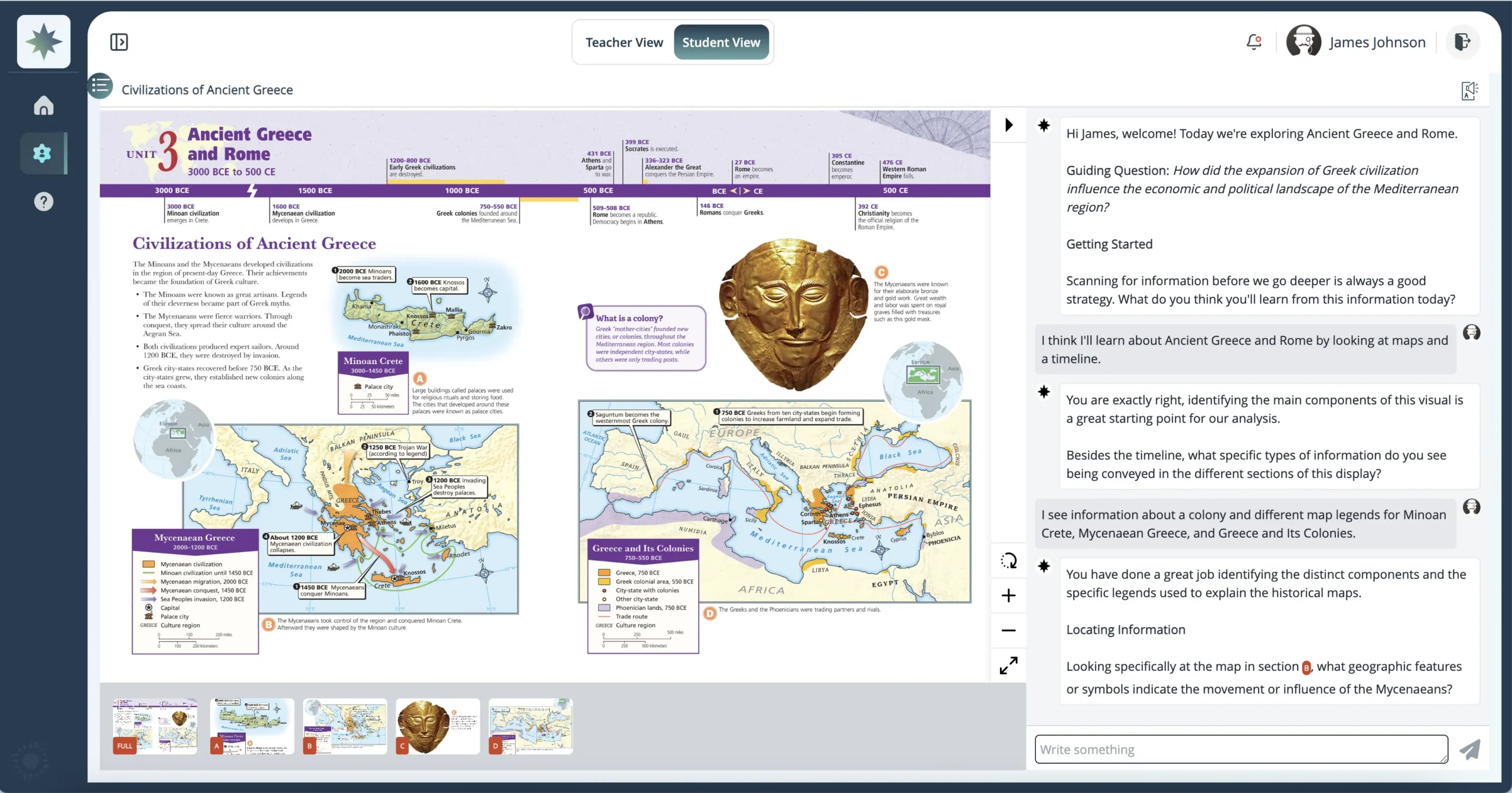
Table of Contents
Chronological survey of world history from early human migration to contemporary global challenges, organized into 10 units spanning civilizations, empires, revolutions, and globalization.
DOK Progression
Students locate evidence across eras and civilizations, interpret cultural interactions, analyze global developments, and apply their learning to understand our shared history.
Skills & Concepts
Strengthens historical thinking and geographic literacy through chronology, comparison, cultural interaction, migration, trade, empire, evidence analysis, global historical perspectives, and continuity and change.
Ready to learn more
about Atlas Assistant?
Sign up for a free trial or reach out to your dedicated curriculum specialist.
Start a conversation